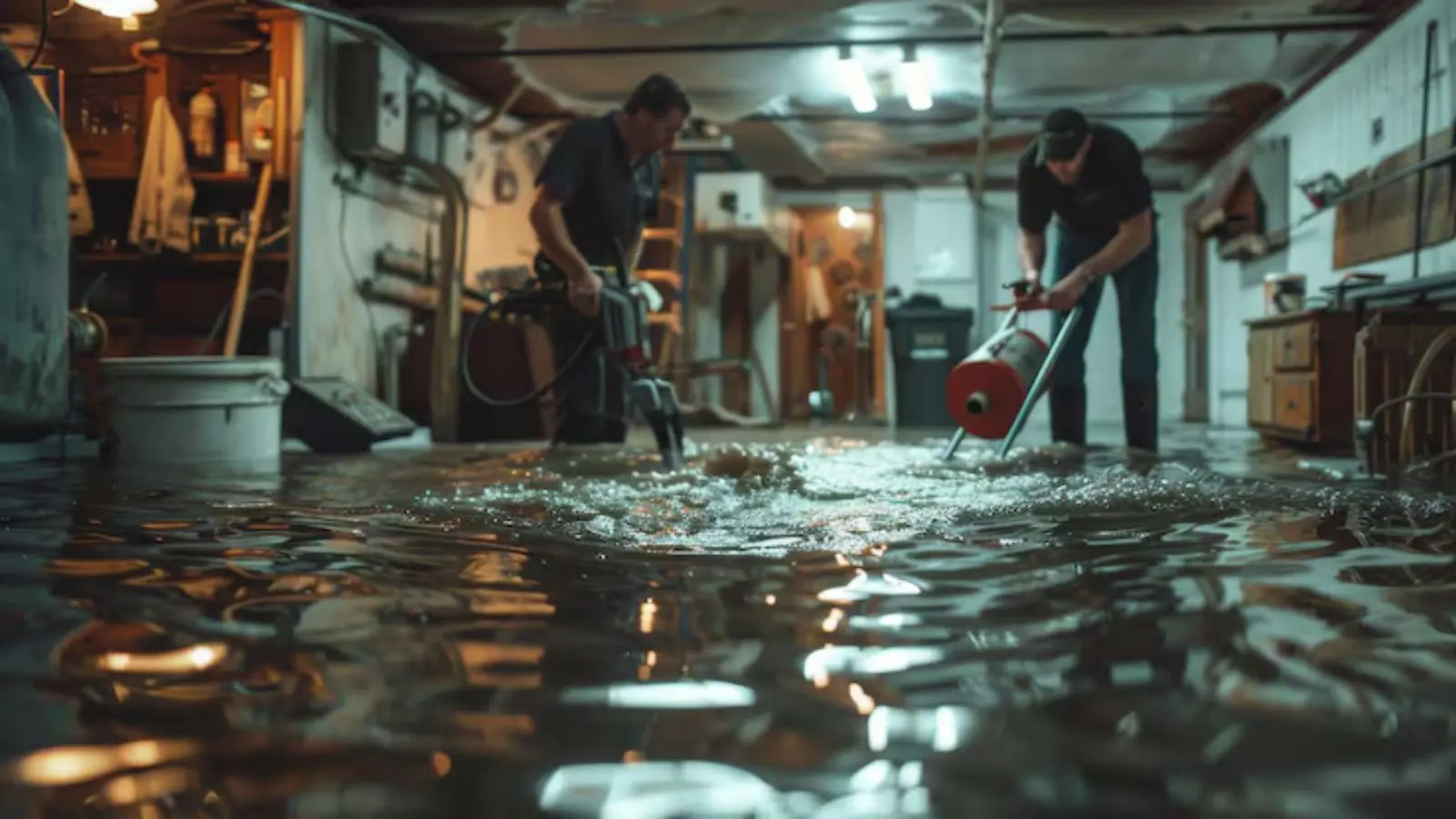
Standing water is damaging your floors, walls and belongings every hour it stays. Our line is open 24/7, and a crew can be dispatched the same day when one is available. While you wait, shut off the main water valve, turn off power to wet areas only if you can reach the panel on dry floor, and lift valuables and furniture.
When Standing Water Is An Emergency
Standing water is an emergency whenever it covers a floor, rises toward outlets, soaks carpet or sits in a basement or crawl space. Even a quarter inch spreads under baseboards and into walls within hours. Fast removal limits the area that has to be dried and rebuilt, which is why this page covers extraction alone, while water mitigation covers the drying that follows.
Water that is up to your ankles is a different call from a damp spot. If you cannot see the floor, assume electrical risk and stay out. Keep children and pets away.
Check these before anyone steps into the water
Water near outlets, extension cords, appliances or a panel can energize the floor. Cut power only from a dry position, and call the electric utility if you cannot. If you smell gas or hear hissing, leave the building and call 911.
The Equipment That Removes Water
- Submersible pumps move deep standing water from basements and crawl spaces.
- Truck-mounted and portable extraction units pull water out of carpet, padding and hard floors.
- Wet vacuums handle the last film of water along baseboards and in tight spots.
- Moisture meters and thermal imaging show where water traveled so extraction reaches it.
Extraction comes first because drying equipment cannot evaporate pools. Once the standing water is out, the crew sets air movers and dehumidifiers as described under water mitigation.
Burst Pipe Water Damage
A burst pipe is the classic extraction call. The first step is stopping the flow, and many homes have a main shutoff at the meter or where the line enters the house. Learn where yours is before you need it, since a pipe sending water into a wall can put hundreds of gallons into a house in an hour.
After the valve is closed, open a faucet at the lowest point to drain the line, and call us. The crew traces the water path, opens the wall where needed, extracts what has pooled and checks the cavity for wet insulation. Pipe repair itself is plumbing work, and a licensed plumber should do it.
Insurance guidance from the Maryland Insurance Administration says a homeowners policy generally covers water damage from a pipe that suddenly bursts, but not the cost of repairing or replacing the pipe. Check your own policy for the details.
Under Sinks, Behind Appliances And In Crawl Spaces
Not all emergencies are floods. A pipe under a bathroom sink, a washer valve that lets go and a water heater that fails can each put water into cabinets and flooring before anyone is home. These are fast, smaller extractions, and the sooner they happen the less flooring has to be replaced.
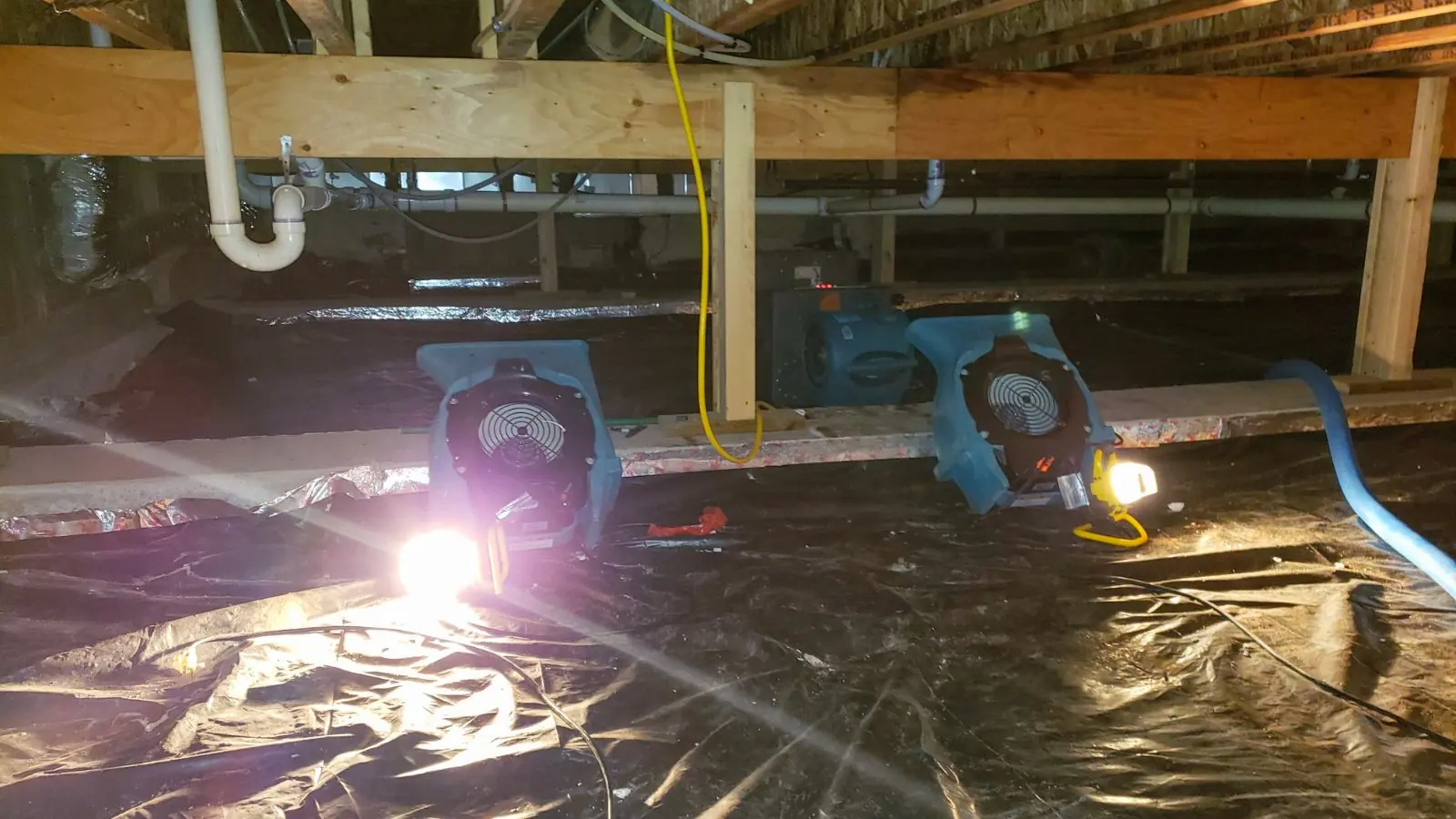
A crawl space with water needs a different approach, because the space is tight and the insulation and subfloor above it hold moisture. A broken irrigation line or a backflow can send water in, and the crew will pump the space and check the subfloor for moisture before leaving.
| Situation | What you can do now | What the crew does |
|---|---|---|
| Burst pipe | Close the main valve, open a low faucet to drain the line | Extract, open wet walls, set drying |
| Washing machine or water heater leak | Shut the supply valve, unplug if safe | Extract, check subfloor, dry |
| Toilet overflow | Close the toilet supply valve, keep people out of the water | Extract, remove affected materials, sanitize |
| Basement or crawl space water | Stay out, shut off power if safe, call | Pump in stages, dry, check for mold risk |
Standing water right now?
Call (301) 936-0619. A person answers 24/7.
Water Removal Around Temple Hills
Temple Hills sits close to the Capital Beltway, which links us to neighborhoods on either side of the county line. Crews reach nearby homes in Suitland and Oxon Hill from the Brinkley Road area. Dispatch decides which crew goes where, and the dispatcher will tell you what is possible tonight.
In older apartments, a supply line leak upstairs may have been running for hours before it shows on your ceiling. Tell the property manager when you call, and take photos of the ceiling and floor.
Removal pricing is set by how much water there is and how hard it is to reach.
- Depth and area. Deep water across a large area means more pumping.
- Access. Crawl spaces and basements slow equipment.
- Water category. Contaminated water adds protection and disposal.
- Time of day. Nights and holidays call out crews on short notice.
- Follow-up drying. Drying is a separate stage after removal.
Scope and price are explained before work starts. Call (301) 936-0619 for a real number.
Industry Standards And Safety Basics
Professional water work in Temple Hills is commonly guided by the ANSI/IICRC S500 standard for water damage restoration. It sorts water by contamination category and drying by moisture readings rather than by guesswork. Until a crew arrives, stay out of rooms with sagging ceilings, do not use electrical devices near standing water, and do not mix cleaning products. If you smell gas or see sparks, leave and call 911.
Common Questions
Do you handle water removal emergencies at night or on weekends in Temple Hills?
Yes. The line is answered 24/7 and same-day response is offered when a crew is available. Nights and holidays are routine for the dispatcher.
What should I do while waiting for the crew?
Stop the source if it is safe, avoid water near electrical items, lift valuables and small furniture, and take photos before moving things. Do not walk through water that may be energized.
Can I use a regular vacuum to remove water?
No. A household vacuum is not made for water and can be a shock risk. A wet vacuum is designed for it, but large amounts need pumps and extraction units.
Do you also dry the house after the water is out?
Yes. Extraction is the first stage and drying follows. See the water mitigation page for how drying is set up and monitored.