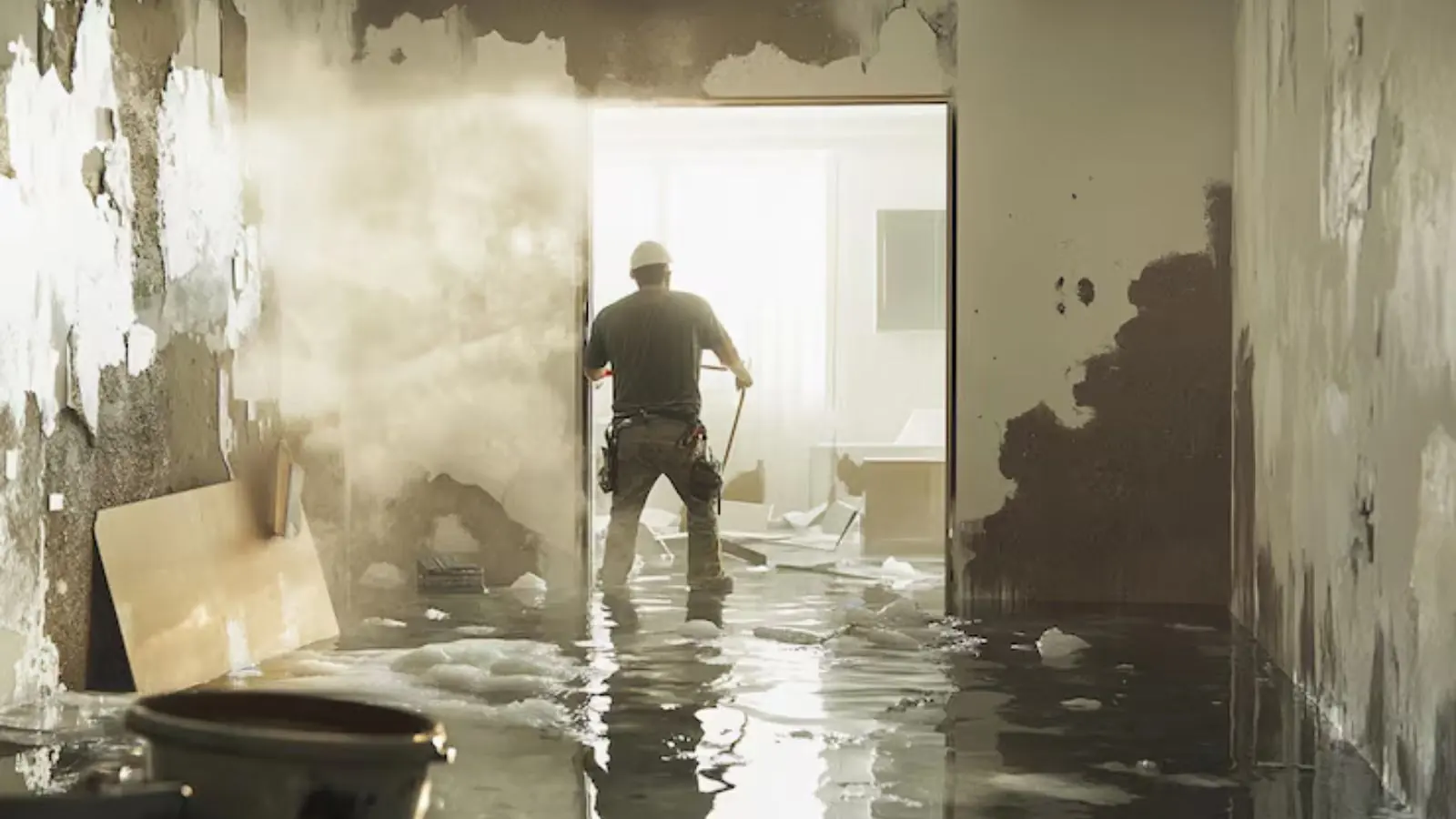
Water damage repair in Temple Hills starts only after the structure is dry, because covering wet framing with new drywall seals moisture in. This page covers the rebuild, from a ceiling stain after a roof leak to a cupped hardwood floor after a washer valve failure. If water is still spreading, start with water mitigation instead.
Ceiling And Wall Water Damage Repair
A brown ring on a ceiling is the most common sign of a leak, and it is the sign most often painted over. Paint does not stop the leak and does not dry the drywall behind it. The first job is to find the source, which may be a roof flashing, a bathroom above, an air-conditioner condensate line or a supply pipe in the wall.
Once the source is fixed and the area is dry, the repair is direct. Wet drywall is cut back to a clean edge, insulation behind it is checked and replaced if it is compressed or stained, and new board is hung, taped, textured and primed so the patch does not show through the finish coat. A sagging or bubbling ceiling is a safety issue, because wet drywall can drop without warning, so keep out from under it.
A collapsed ceiling is a different scale of problem. It needs debris removal and often an electrical check for fixtures and wiring that were above it before any new drywall goes up.
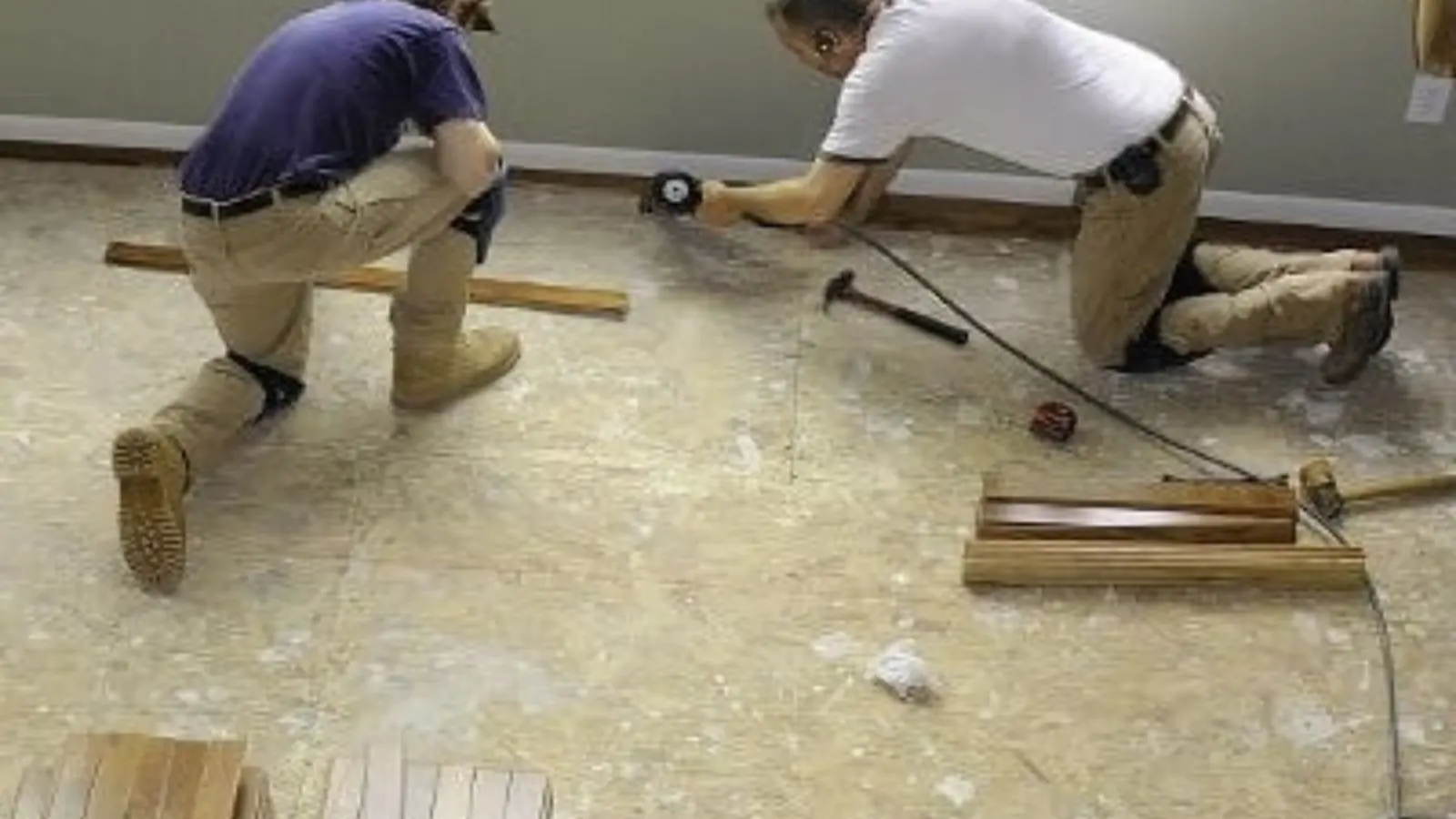
Hardwood And Wood Floors After Water
Wood floors respond to water by cupping at the board edges or crowning in the center. Cupping that appears after a leak or a plumbing failure is a moisture problem under the floor, and a surface sanding will not fix it. The floor has to be dried first, often with mats and drying equipment that pull moisture out through the boards, and then given time to settle.
After drying, a mildly cupped floor may flatten on its own and need only a sand and refinish. Boards that stay deformed, split or stained black are replaced. A hardwood floor that sat under a long-term leak, such as an HVAC condensate line backing up, is more likely to need replacement than one dried within days.
| Damage | Typical repair | What decides it |
|---|---|---|
| Stained ceiling, firm to the touch | Stain block, primer and paint after the source is fixed | Dry moisture reading, no sag |
| Sagging or bubbled ceiling | Cut out and replace drywall, retape and finish | Extent of wet area |
| Soft or crumbling drywall on a wall | Cut back to dry edges, replace insulation if wet, hang new board | How high the wicking went |
| Cupped hardwood | Dry, wait, sand and refinish if it flattens | Moisture reading and duration of wetting |
| Wet vinyl or laminate | Pull up and replace the planks and underlayment | Whether water got under the floor |
What Gets Checked Before Anything Is Rebuilt
- Moisture readings show the framing, subfloor and drywall are dry.
- The source of the water is fixed, not just patched.
- Wall and ceiling cavities are inspected for mold, and if it is found the work is routed to mold remediation first.
- Any needed permits are identified. In Prince George's County, DPIE handles permits and inspections, so ask your contractor whether your repair needs one.
Repair Work In Temple Hills Housing
Many Temple Hills homes were built in the 1950s through the 1970s, and matching old trim, plaster walls and original flooring takes planning. A repair that looks fine in a pale primer can show against forty years of paint, so the finish matters as much as the board. In garden apartments, repairs often touch two units, and the property manager decides who pays for what.
The same crew can carry a job from the first call through the rebuild, or hand off drying and cleanup records to your own contractor. Either way, water damage cleanup and drying come before the repair, and your insurer may want those records. Customers in Clinton and Oxon Hill get the same repair service.
Ready to repair water damage?
Call (301) 936-0619 and we will arrange an assessment.
Repair pricing follows the materials and the size of the area, so it is set after the structure is measured.
- Area affected. A single ceiling patch costs less than a whole room.
- Materials. Plaster, hardwood and cabinets cost more than basic drywall and vinyl.
- Finish matching. Texture, paint and trim must match what is already there.
- Access. Second floors and tight spaces add labor.
- Permits. Some rebuild scopes need a permit through the county.
Water damage from a sudden event is often covered, but the cost of fixing the pipe itself usually is not, according to the Maryland Insurance Administration's guidance. Check your policy. Call (301) 936-0619 for a real number.
Industry Standards And Safety Basics
Professional water work in Temple Hills is commonly guided by the ANSI/IICRC S500 standard for water damage restoration. It sorts water by contamination category and drying by moisture readings rather than by guesswork. Until a crew arrives, stay out of rooms with sagging ceilings, do not use electrical devices near standing water, and do not mix cleaning products. If you smell gas or see sparks, leave and call 911.
Common Questions
Can you just paint over a water stain on a ceiling?
Paint hides a stain but does not fix the moisture. If the drywall behind it is wet or the source is still active, the stain returns and mold can start. Fix the source, confirm the area is dry, then repair.
How do you know when drywall needs to be replaced and not dried?
Drywall that is soft, sagging, crumbling or stained from a dirty-water source is replaced. Firm drywall with a small, recent clean-water wetting can often be dried in place and checked with a moisture meter.
Will my cupped hardwood floor flatten?
Sometimes. If the floor is dried quickly and carefully, mild cupping can settle over a few weeks. Boards that stay deformed, split or stained are replaced.
Do I need a permit for water damage repair?
It depends on the scope. In Prince George's County, permits and inspections are handled by DPIE, the county's permitting department. Ask your contractor whether your rebuild needs one and keep the paperwork.