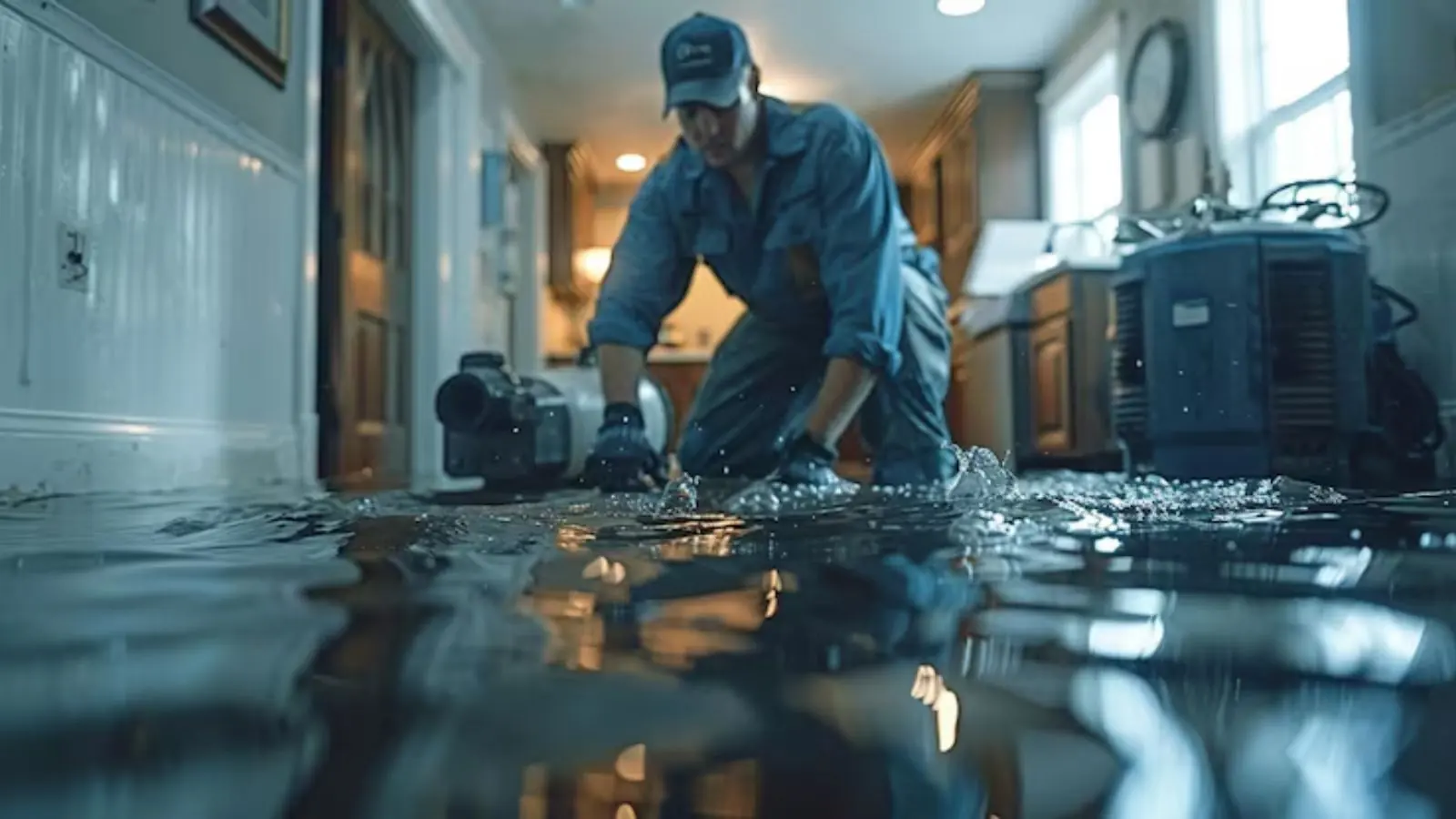
To fix flood damage in Temple Hills, treat the water as contaminated until proven otherwise and work in a strict order. Safety comes first, then pumping, then removal of porous materials, then cleaning and sanitizing, then drying, and finally the rebuild. A flood is different from a pipe leak because the water arrives from outside the plumbing system, carrying soil, bacteria and sometimes sewage.
Before You Touch Anything: Safety
Do not enter a flooded basement or room if water is near outlets, panels or appliances, and do not turn on equipment that has been underwater. Turn off power at the panel only if you can reach it while standing on dry ground. If you smell gas, leave the building and call 911 and the gas utility.
Keep children and pets out of flood water. Wear boots and gloves if you must enter, and wash well afterward. Never run a household vacuum on standing water.
Pump Out The Water, But Not Too Fast
In a flooded basement, water outside the foundation can push against the walls. Pumping the basement empty too quickly while the ground outside is still saturated can stress the walls, so crews typically remove water in stages and let the outside level fall. That is a good reason to leave the pumping to a team that does it often. The emergency water removal page describes the equipment.
Remove What The Flood Touched
| Item | After flood water | Why |
|---|---|---|
| Carpet and pad | Discard | Contaminated and hard to clean |
| Lower drywall | Cut out above the water line | Wicks water and holds contamination |
| Insulation | Discard if wet | Holds water and contaminants |
| Solid wood furniture | Clean and dry, may be saved | Dense, can be sanitized |
| Upholstered furniture and mattresses | Usually discard | Cannot be sanitized |
| Tile and sealed concrete | Wash and sanitize | Nonporous |
Photograph everything before it goes to the curb. Your insurer may want to see it, and flood policies often require an inventory.
Clean, Sanitize And Dry
After the porous materials are out, hard surfaces are washed with detergent and water, rinsed and then sanitized. Do not mix chemical cleaners, and ventilate the area. Next come dehumidifiers and air movers, with moisture readings to show when the structure is dry. Concrete and framing in a basement can take longer than drywall.
The EPA advises drying water-damaged areas and items within 24 to 48 hours to prevent mold growth, which is hard to meet in a flood, so a fast start matters more here than anywhere. If mold has already formed, the mold remediation page explains the next step.
The Rebuild Comes Last
New drywall, flooring and paint go in only when readings show the framing and slab are dry. Flood work often involves more than one trade, including electricians to check wiring and panels, plumbers for sewer lines and sump pumps and HVAC technicians for equipment that sat in water. Coordination matters, and a written scope for each helps.
What Not To Do After A Flood
- Do not run a furnace, water heater or appliance that sat in water until it has been checked.
- Do not leave wet carpet and pad in place hoping they will dry.
- Do not mix cleaning chemicals, and do not use a household vacuum on wet floors.
- Do not rebuild or paint until moisture readings show the structure is dry.
- Do not throw away damaged items before you have photographed them.
What The County Says About Flooding And Utilities
Prince George's County's published flood history calls Tropical Storm Agnes in June 1972 the storm of record and says it caused more than $10 million in damage to the county. More than 1,800 people were served at shelters, and the county reports that WSSC found erosion damage to some water supply mains and damage to low-lying sewage and pump facilities.
The practical tie-back is that a major flood can affect the utilities as well as your house. After a big storm, check for a boil water advisory and sewer problems before you assume the pipes are fine, and call the utility for anything that looks like a main or street problem. WSSC Water lists 301-206-4002 for sewer emergencies.
Source type: county government flood history page and water utility contact page
Neighbors in Oxon Hill along the Potomac and Clinton in the south county can reach us the same way, and the flood damage restoration page covers our approach in more detail.
Common Questions
Is flood water always Category 3?
Flood water from storms, creeks and the ground is normally treated as Category 3 under the ANSI/IICRC S500 standard because of what it picks up on the way. That means porous materials are removed, not dried in place.
Can I keep my carpet after a basement flood?
Not usually. Carpet and pad that sat in flood water are normally discarded. Hard surfaces and solid wood can often be cleaned and dried.
Does the county help with flood cleanup after a big storm in Temple Hills?
Prince George's County publishes flood information and points residents to FEMA's flood maps and its flood management office. Cleanup of private property is normally your responsibility, covered by insurance if you have the right policy.
How do I know if my basement flooded because of the creek or because of a sump failure?
Look at the timing and the source. Water coming through the floor or walls in heavy rain suggests groundwater, while water around a failed sump pit suggests a pump or power problem. Take photos and tell your adjuster, because the cause affects coverage.