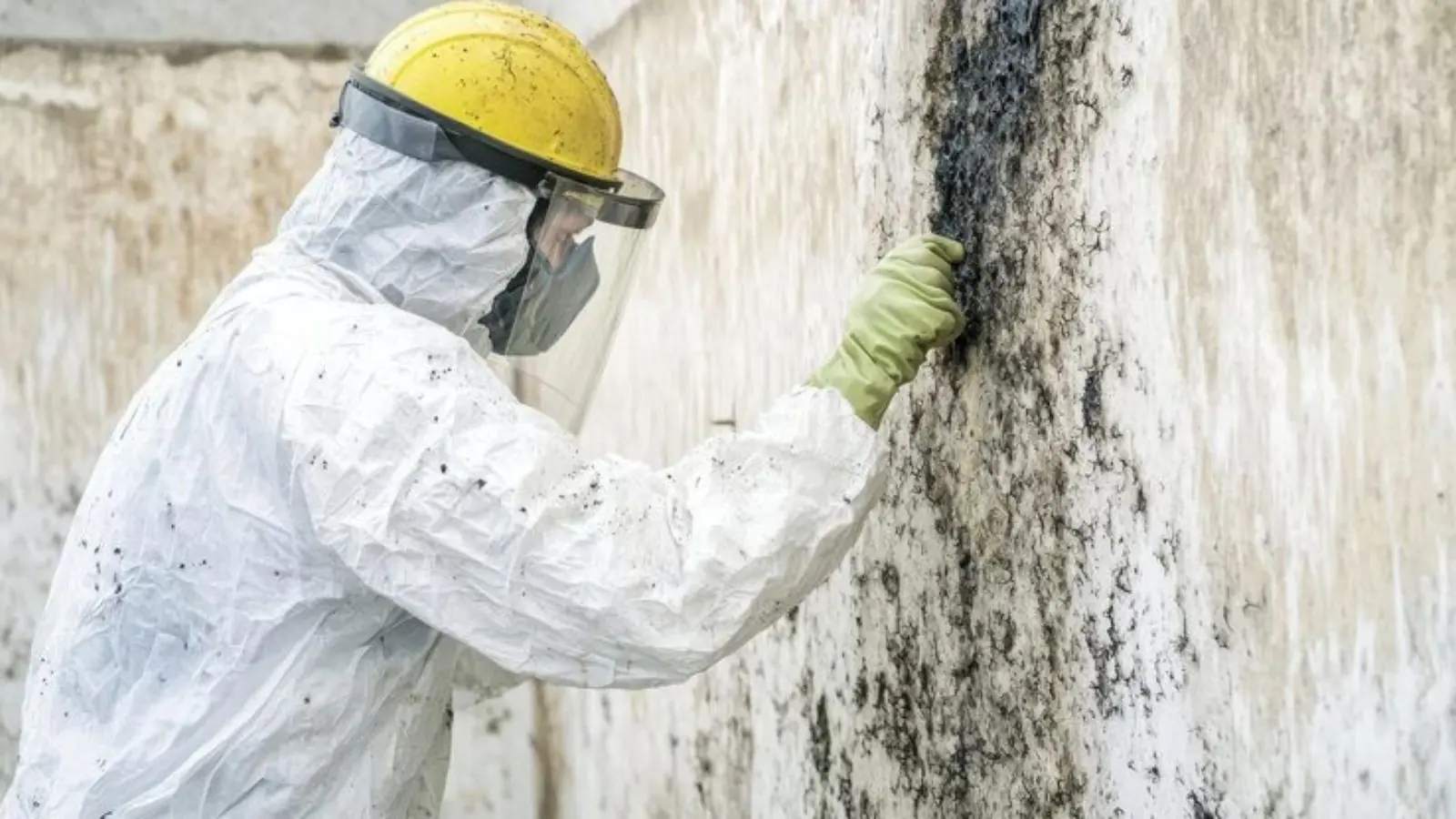
People who ask how to get rid of black mold in Temple Hills are usually looking at a dark patch on a wall, a ceiling or the underside of a shelf and wondering how serious it is. The honest answer starts with a limit.
You cannot tell the type of mold or its risk by color alone, and a dark patch is treated the same practical way as any other growth: find the moisture, protect the area, remove damaged material and clean what can be saved.
Myths And Facts About Black Mold
| What people say | What is more accurate |
|---|---|
| Black mold is always the dangerous kind | Color does not identify a type or a risk level. Mold of many colors can look dark |
| Bleach kills it for good | The EPA does not recommend bleach as a routine step. Fix the moisture and remove or clean the material |
| A test will tell me if my house is safe | The EPA says there are no federal limits for mold, and that sampling is generally unnecessary if growth is visible |
| Painting over it hides the problem | The EPA says not to paint or caulk moldy surfaces before cleaning and drying them |
| If I kill it, it is gone | Dead mold can still need to be removed. The EPA says it must be removed, not only killed |
The Order Of Work
- Find the water. Look for a leak, a condensation problem or a history of flooding. Mold on a wall with no moisture source is rare.
- Fix the water source and dry the area. This is the step that most decides whether the mold returns.
- Decide the scale. The EPA says an area of about 10 square feet is manageable for a person, and it advises calling a professional above that or when significant water damage is involved.
- Clean hard surfaces with detergent and water and dry completely. Porous materials such as ceiling tiles, carpet and drywall paper may need to be thrown away.
- Rebuild only after the area is dry.
Our mold remediation page describes how containment and removal are handled on bigger jobs, and the water damage cleanup page covers what is removed after a water event.
Where Black-Looking Mold Often Hides
- Behind and under sinks, where a slow trap leak keeps cabinet bases damp.
- On the back side of drywall near a window that sweats.
- In basements, along the base of walls and on stored cardboard.
- In closets that share a wall with an exterior or an air handler.
- Under carpet pads after a spill or flood that was not dried quickly.
Protect yourself and the rest of the house
Do not dry-scrub or sand mold, and do not run a fan that blows air through the moldy area into the rest of the house. Wear gloves, eye protection and a mask when cleaning small areas. Questions about symptoms or risk belong with a physician, and we do not make health claims.
When To Call A Specialist
Call when the patch is larger than about 10 square feet, when the cause was a flood or sewage, when there is a musty smell and no visible source or when the mold comes back after cleaning. A specialist can find hidden moisture and work in containment. The question to ask first is where the water came from.
What Professional Removal Looks Like
On a larger job the crew starts by measuring moisture and mapping the affected area. Plastic barriers seal the work zone, and air filtration keeps spores from drifting to other rooms. Porous material that is moldy comes out and is bagged on site, and framing and hard surfaces are cleaned with HEPA vacuums and damp wiping.
The last stage is drying and a final check of the area, followed by a written record of what was done. Rebuilding happens after that, and it is quoted separately.
Mold And Property Rules In An Unincorporated Community
Temple Hills is an unincorporated community in Prince George's County, so local government services come from the county and not from a town hall. The county's Department of Permitting, Inspections and Enforcement describes its role as including property code enforcement, such as property maintenance, alongside permits and inspections.
The practical tie-back for renters is that a recurring moisture problem should be reported to the landlord in writing, with dated photos. For owners, the same office is where permit questions about a larger rebuild go. This is general information and not legal advice.
Source type: public encyclopedia description and county agency description
If you live in Clinton or Oxon Hill, the same practical steps apply.
Common Questions
Is black mold more dangerous than other mold?
You cannot tell the type or risk from color. We do not make health claims, and anyone with health concerns should ask a physician. Practically, all visible mold should be addressed by fixing the moisture and removing or cleaning the affected material.
How do I know if mold is a big enough problem to hire someone?
The EPA says to consider a professional when mold covers more than about 10 square feet, when there has been significant water damage or when contaminated water or HVAC contamination is involved.
Does killing mold with a spray solve the problem?
Not by itself. The EPA says dead mold must still be removed, and the moisture source must be fixed. A spray on porous materials does not reach the growth inside them.
Is mold in a Temple Hills basement more likely than elsewhere?
Basements anywhere are prone to dampness. The county says low spots can flood even when they are not near a stream, so a basement that takes on water is a real risk. Look up your address on the FEMA flood map and fix drainage and leaks.