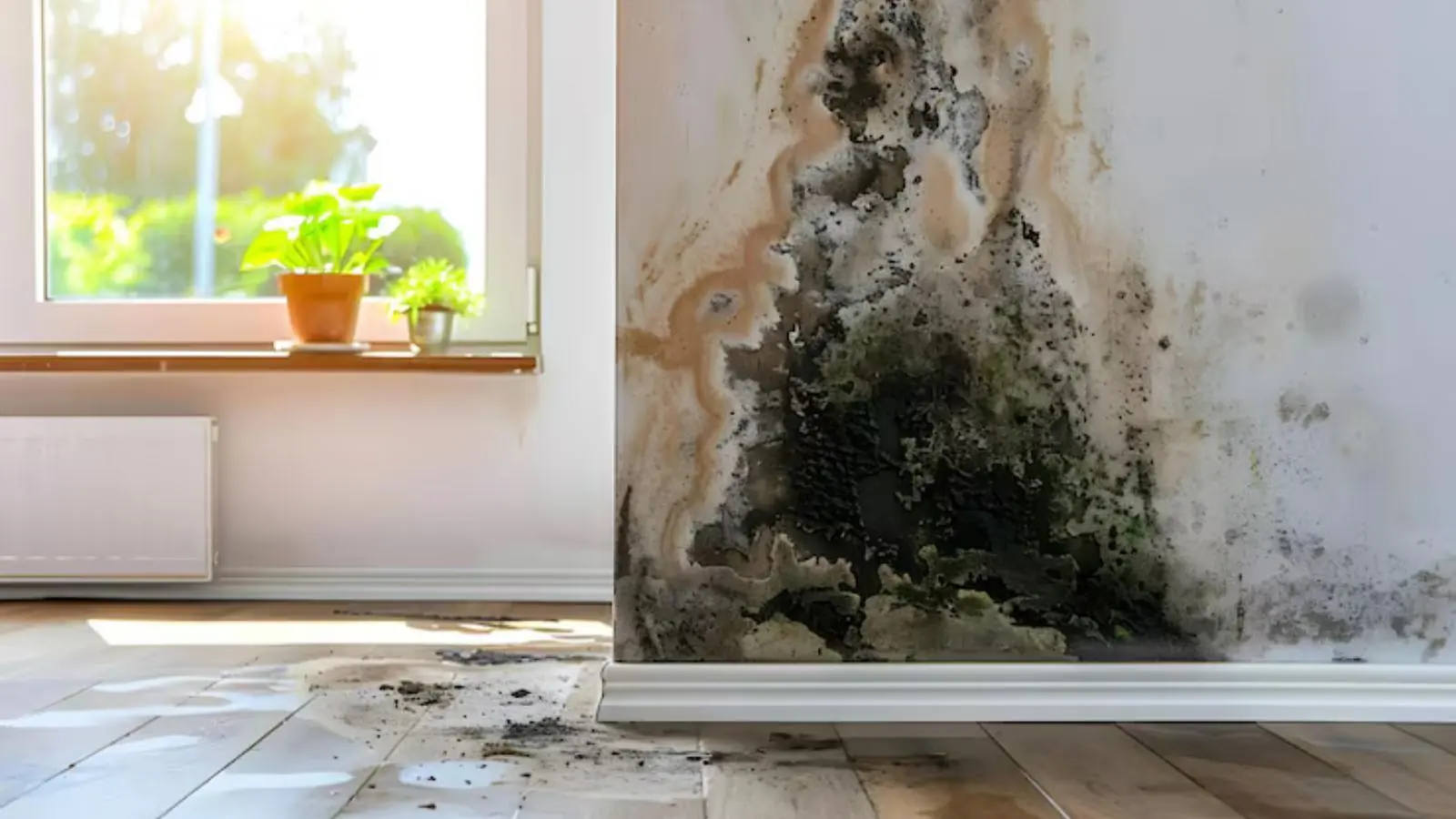
Mold from water damage in Temple Hills is predictable. Mold needs moisture, a food source and time, and a wet wall or ceiling provides all three. The EPA says that if water-damaged areas and items are dried within 24 to 48 hours, mold usually will not grow. After that window, the odds change, and the materials that are hardest to dry are the ones most likely to be affected.
What Mold Looks And Smells Like After A Leak
Mold can appear as fuzzy or slimy patches, as dark freckles on paint or as a gray or green film on wood and fabric. Color does not identify the type or the risk. The smell is often the first sign, a damp, earthy odor that is stronger in closed rooms.
Visible growth is not the only sign. Mold grows behind wallpaper, under carpet pads and inside wall cavities. A musty smell with no visible source suggests hidden moisture.
| Time since the water | What is happening | What to do |
|---|---|---|
| First 24 to 48 hours | Materials can still be dried to stop mold | Extract, dry, check readings |
| After 2 to 3 days | Wet porous materials may begin to support growth | Remove what cannot be dried |
| After a week or more | Visible growth is possible, especially in closed cavities | Assess, contain and remove |
| Recurring dampness | Ongoing moisture source | Find and fix the source |
Which Materials Are Most At Risk
Porous and cellulose-based materials are the main targets. Drywall paper, ceiling tiles, carpet pad, insulation, particleboard and cardboard hold moisture and feed growth. The EPA notes that porous materials such as ceiling tiles and carpet may need to be thrown away if they become moldy, because mold can be impossible to fully remove from them. Solid wood, tile and sealed concrete usually clean up.
When Is It A DIY Cleanup, And When Is It Not?
The EPA says a person can likely handle a moldy area of about 10 square feet, roughly 3 feet by 3 feet, by scrubbing hard surfaces with detergent and water and drying completely. It says to call a professional if there has been significant water damage or if mold covers more than 10 square feet, and to consult one when contaminated water or suspected HVAC contamination is involved.
Fix the water source first. Do not paint over mold or caulk it. The EPA does not recommend bleach as a routine step in mold cleanup, and warns never to mix chlorine bleach with products that contain ammonia.
Before you disturb moldy material
Do not dry-scrub or sand moldy surfaces, since that releases spores. Keep the area closed and turn off fans that would move air through the house. Health questions belong with a physician, and we do not make health claims.
How We Approach It
The first step is to find the moisture and measure it. Where growth is present, the work follows the ANSI/IICRC S520 standard for mold remediation, with containment, removal of damaged materials and cleaning of what can be saved. The mold remediation page describes the process, and the water mitigation page explains how drying stops the problem before it starts.
Keeping Mold From Starting After A Leak
- Fix the leak and stop the water before anything else.
- Remove standing water and pull wet carpet and pad away from the floor.
- Run air movers and a dehumidifier, and keep interior doors open so air circulates.
- Check hidden places, such as the back of a closet wall, under cabinets and behind furniture.
- Keep indoor humidity in a comfortable range and use bathroom fans that vent outdoors.
Mold Rules In Maryland
A 2016 evaluation by the Maryland Department of Legislative Services reported that a 2008 law created a licensing requirement for mold remediation firms, requiring certified workers and at least $1 million in liability insurance, and that the program had never been funded or put into effect. Chapter 333 of 2011 had moved the licensing deadline to July 1, 2013, which also passed.
The practical tie-back is to ask any mold company what it is required to carry today. Rules can change, and a review from 2016 is not a current statement of law. Ask for proof of liability insurance and a written scope, and read the S520 reference if a company claims to follow it.
Source type: state legislative evaluation report
Homes in Suitland and Clinton are covered by the same crews, and the advice is the same.
Common Questions
How long after a leak does mold grow?
The EPA says that if wet materials are dried within 24 to 48 hours, mold usually will not grow. After that, growth becomes more likely, especially in porous materials.
Do I need mold testing after water damage?
Not usually. The EPA says that if visible mold growth is present, sampling is generally unnecessary, and that there are no federal limits for mold in homes. Testing can help in specific cases, such as confirming a cleanup, and should be done by professionals.
Can I use bleach on mold?
The EPA does not recommend bleach as a routine practice in mold cleanup. Scrub hard surfaces with detergent and water and dry them. Never mix chlorine bleach with products that contain ammonia.
Does Maryland license mold removal companies?
A 2008 Maryland law created a licensing requirement, and a 2016 state evaluation found it had not been put into effect. Rules can change, so ask any company what is required now and ask for proof of liability insurance.