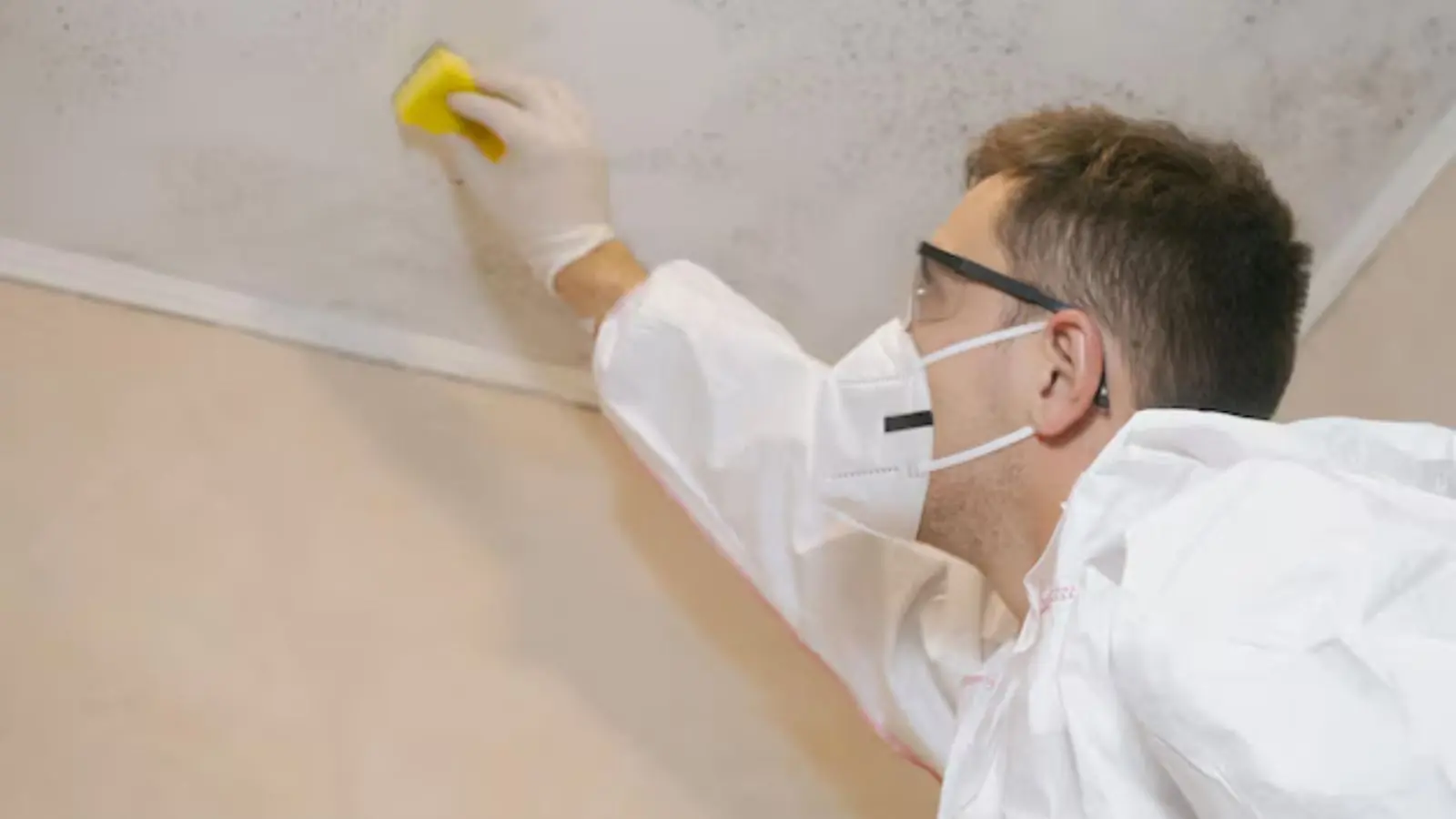
To remove mold on a bathroom ceiling in Temple Hills, first work out where the moisture is coming from. A ceiling that sweats from hot showers and a ceiling that leaks from the floor above both grow dark spots, but only one of them is solved by cleaning. If the moisture keeps coming, the spots keep coming back.
Steam Or Leak: How To Tell
Steam mold tends to start in the corners and along the edge of the ceiling, in the places that stay coolest and receive the least air. It often forms a thin, even film of dark spots. A leak tends to show a stain with a rim and a discolored patch that darkens after someone uses the plumbing above, or after rain if the roof is above.
Press a finger on the ceiling. A soft, cool or damp spot suggests a leak. A firm, dry surface with dark spots suggests condensation. If there is any sign of a leak, stop and read water mitigation, because drying the cavity comes before cleaning the surface.
| Clue | Likely cause | First step |
|---|---|---|
| Spots in corners, firm ceiling | Steam and poor ventilation | Run the fan longer, clean small areas |
| Brown stain with a ring | Leak above or roof leak | Find and fix the source |
| Soft, damp drywall | Active leak | Stop water, call a crew |
| Spots over the shower only | Splash and steam | Clean, seal and ventilate |
| Spots and a musty smell all over | Hidden moisture | Moisture readings, assessment |
Cleaning A Small Patch
The EPA says a person can likely handle a moldy area of about 10 square feet. For a small patch on a firm ceiling, the steps are simple.
- Wear gloves, eye protection and a mask, and open a window or run the fan.
- Scrub the area with detergent and water and a soft brush or sponge, working gently.
- Wipe with clean water and dry completely with a towel and a fan.
- Do not mix chlorine bleach with cleaners that contain ammonia, and ventilate if you use any disinfectant.
- Fix the cause, then prime with a mold-resistant primer and paint.
The EPA does not recommend bleach as a routine practice in mold cleanup, and it says not to paint or caulk over mold before it is cleaned and dried. If the drywall is soft, crumbling or stained all the way through, cleaning will not work and the board needs to be cut out.
Do not scrub a wet or sagging ceiling
If the ceiling is bulging, sagging or dripping, keep out from under it and do not scrub. Water in a ceiling fixture is an electrical hazard, so cut power only from a dry position. Call for help.
Fix The Cause So It Does Not Return
- Use a bathroom fan that vents outdoors, not into the attic, and run it during showers and for a while afterward.
- Check that the fan actually moves air by holding a tissue against the grille.
- Fix leaks above the ceiling, including roof flashing and supply lines.
- Seal gaps around light fixtures and vent pipes that let humid air into the ceiling cavity.
- Wipe down wet surfaces after showers and keep the door open to let air move.
Checking That The Fan Works
Many bathroom fans are old, undersized or ducted into the attic where the moisture simply moves to another place. Hold a tissue to the grille while the fan runs. If it does not pull the tissue flat, the fan is weak or blocked. A new fan that vents through the roof or a wall to the outdoors, installed by a qualified contractor, solves more bathroom ceiling mold than any cleaner.
When To Call A Professional
Call when the patch is larger than about 10 square feet, when there was significant water damage, when the drywall is soft or when mold keeps returning after cleaning. A crew can measure moisture, open the ceiling to see the cavity and work in containment, as described on the mold remediation page. We do not make health claims, and anyone concerned about their health should ask a physician.
Bathrooms In Temple Hills Garden Apartments And Duplexes
A public encyclopedia description says most housing in Temple Hills was built from the 1950s through the 1970s, and that it includes garden apartments, duplexes and single-family homes. In stacked and attached buildings, a bathroom ceiling can sit under another unit's plumbing, which makes a leak possible as well as condensation.
The practical tie-back is to ask a simple question before cleaning. Is there a unit, an attic or a roof above this bathroom? If there is a unit above, tell the manager and keep photos, because the fix may not be in your hands.
Source type: public encyclopedia housing description
The same advice applies in Oxon Hill and Suitland buildings of a similar age.
Common Questions
Is bathroom ceiling mold always caused by a leak?
No. Steam and poor ventilation are more common causes. A leak is more likely if the ceiling is soft or stained with a ring, or if spots appear after someone uses the plumbing above.
Can I clean bathroom ceiling mold with bleach?
The EPA says bleach is not recommended as a routine practice in mold cleanup. Scrub hard surfaces with detergent and water and dry completely. Never mix chlorine bleach with products containing ammonia.
Will a mold-resistant paint fix the problem?
It can slow growth on a clean, dry surface, but it does not fix a leak or poor ventilation. Fix the cause first.
My Temple Hills apartment bathroom has no exhaust fan. What can I do?
Ask the property manager about installing one, and meanwhile open a window or leave the door open after showers, wipe wet surfaces and keep humidity down. Put the request in writing.