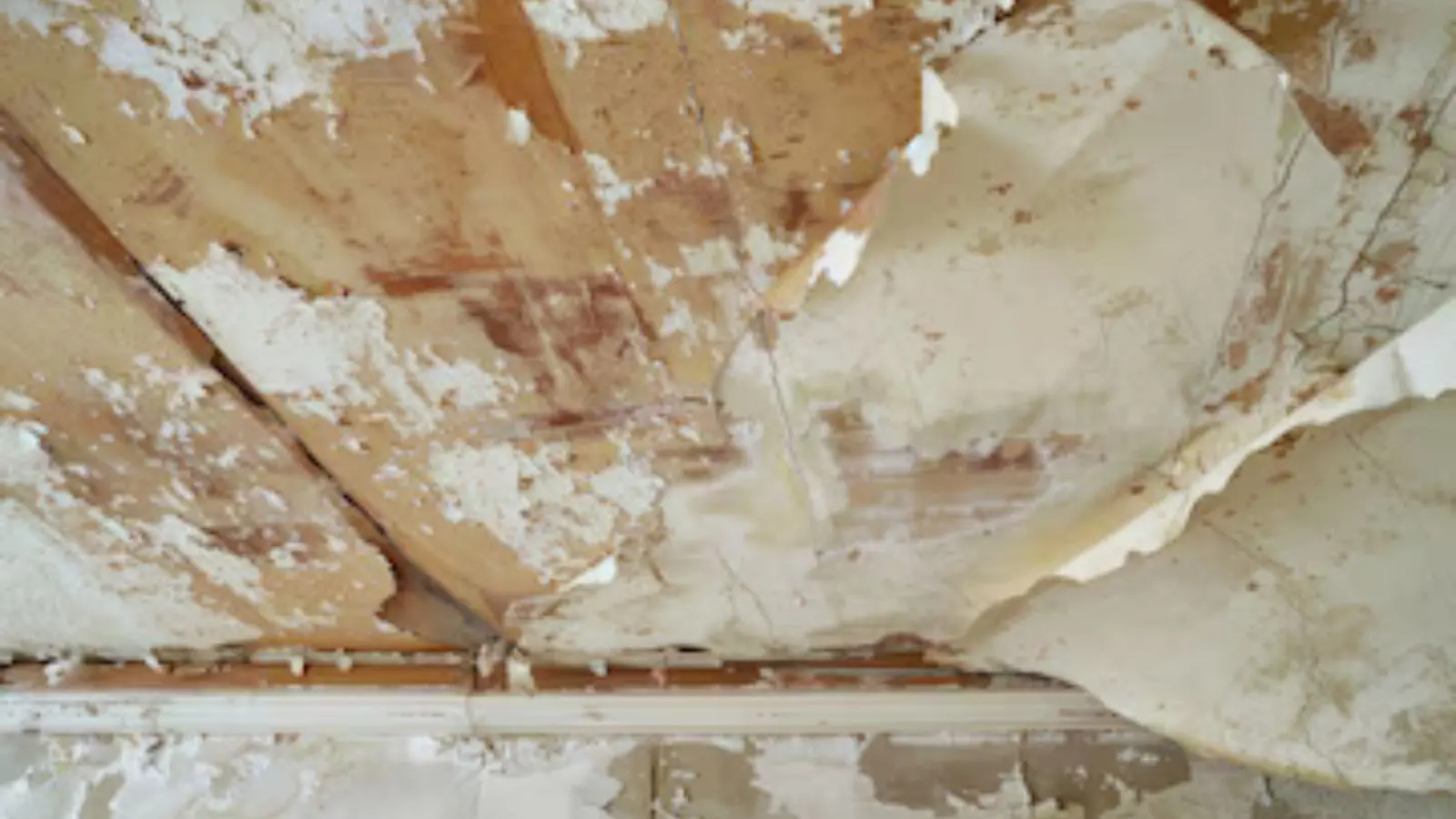
A water damage ceiling problem in Temple Hills usually starts as a faint brown ring that you notice on a Sunday morning. By the following weekend the ring has grown, the paint has started to bubble and the room smells slightly damp. Ceilings show water damage late, because the water has already traveled through insulation and drywall before it reaches the paint.
What A Ceiling Stain Is Telling You
The color and shape of a stain say something about the leak. A light tan ring with a darker edge usually means water has passed through the ceiling more than once, drying each time and leaving a rim.
A spreading yellow or brown patch that is still damp means the source is probably still active. Bubbling paint means water is trapped between the drywall and the finish.
Sagging is the serious sign. Drywall that has absorbed enough water becomes heavy and soft, and it can fall without warning. If you see a bulge or a deep sag, keep people and pets out from under it and call. The next section helps you work out where the water is coming from.
| What you see | Likely meaning | How urgent |
|---|---|---|
| Dry tan ring, no change in weeks | Old, stopped leak | Have it checked, then repair |
| Damp brown patch that grows | Active leak above | Urgent, find and stop the source |
| Bubbled or peeling paint | Moisture trapped behind the paint | Soon, before drywall softens |
| Bulge or sag | Drywall holding water | Emergency, stay out from under it |
| Dripping or running water | Live leak | Emergency, shut off water and call |
Where Ceiling Leaks Come From In Temple Hills Homes
Four sources account for most ceiling leaks. A bathroom, kitchen or laundry on the floor above is the most frequent in two-story houses and garden apartments, usually from a worn toilet supply line, a tub drain or a washer hose. A roof or flashing leak is the second, and it shows after wind-driven rain.
An air-conditioner condensate line that backs up or overflows is the third, and it is common on upper floors and in closets with air handlers. The fourth is a supply pipe inside the ceiling cavity.
Much of the housing in Temple Hills was built from the 1950s through the 1970s. That age puts original roofs, flashing and plumbing at or past the end of their expected life. If you rent, a leak from the unit above is the building manager's concern to trace, so tell the manager in writing and keep photos.
What To Do When A Ceiling Is Leaking
- Stop the source if you can. If the leak is under a bathroom or kitchen, shut that fixture's valve or the main water valve.
- Keep out from under bulges and sags, and move furniture and electronics away from the wet area.
- Put a bucket under any drip and lay towels or plastic sheeting on the floor.
- Turn off lights and ceiling fans on a wet ceiling and do not use a switch if water is near the fixture. Turn power off at the panel only if you can reach it on dry floor.
- Take photos of the ceiling, the room and any damage to belongings, with a date.
- Call a restoration crew if the ceiling is wet, sagging or the leak is not stopped.
Water near a ceiling light or fan
Water in a ceiling fixture is a shock and fire risk. If you see water running out of a light, stay away from the switch and cut power only from a dry position. If you smell burning or see sparks, leave the house and call 911.
Why Painting Over It Does Not Work
Stain-blocking primer can hide a stain on a dry ceiling. It cannot fix drywall that is wet or a leak that is active, and mold can start behind a fresh coat.
The right order is to fix the source, dry the area with moisture readings to confirm it, and then repair. If you are weighing when to repair and when to call a pro, the water damage repair page explains the sequence, and a fast call to a crew that offers water mitigation limits how far the water spreads.
Ceiling Leaks And The Temple Hills Housing Stock
Temple Hills is an unincorporated community in Prince George's County, with 3,683 housing units counted in the 2020 census and most of its housing built from the 1950s through the 1970s. That means a typical ceiling here sits under a roof that has probably been replaced at least once, over plumbing that may still include original runs.
The practical tie-back is simple. When a ceiling stain appears, ask when the roof was last replaced and whether the plumbing above has ever been repaired, because the answers narrow where to look first. In a garden apartment, ask the manager the same questions about the unit above.
Source type: census housing counts as summarized on a public encyclopedia page
Neighbors in Suitland and Oxon Hill see the same pattern in similar-age buildings, and the crews cover both.
Common Questions
How long can a ceiling stay wet before mold starts?
The EPA says water-damaged areas should be dried within 24 to 48 hours to prevent mold growth, and that mold usually does not grow if wet materials are dried in that window. A ceiling that has been damp for several days is worth having checked.
Should I poke a hole in a bulging ceiling to drain it?
A ceiling that holds water can release it suddenly, and a hole made from below puts water and debris on you and near fixtures. It is safer to keep out and have a crew release and remove the wet drywall.
If I rent a garden apartment in Temple Hills, who fixes a leak from the unit above?
In most cases the property manager arranges the repair of building leaks, but your lease and Maryland rules decide the details. Tell the manager in writing, send photos and keep copies. Ask your insurer about renters coverage for belongings.
Can a ceiling stain be from condensation and not a leak?
Yes. Poorly insulated areas and bathrooms without good ventilation can sweat. If the stain is on an exterior wall corner or near a vent, the cause may be condensation. A moisture reading tells you whether water is present.