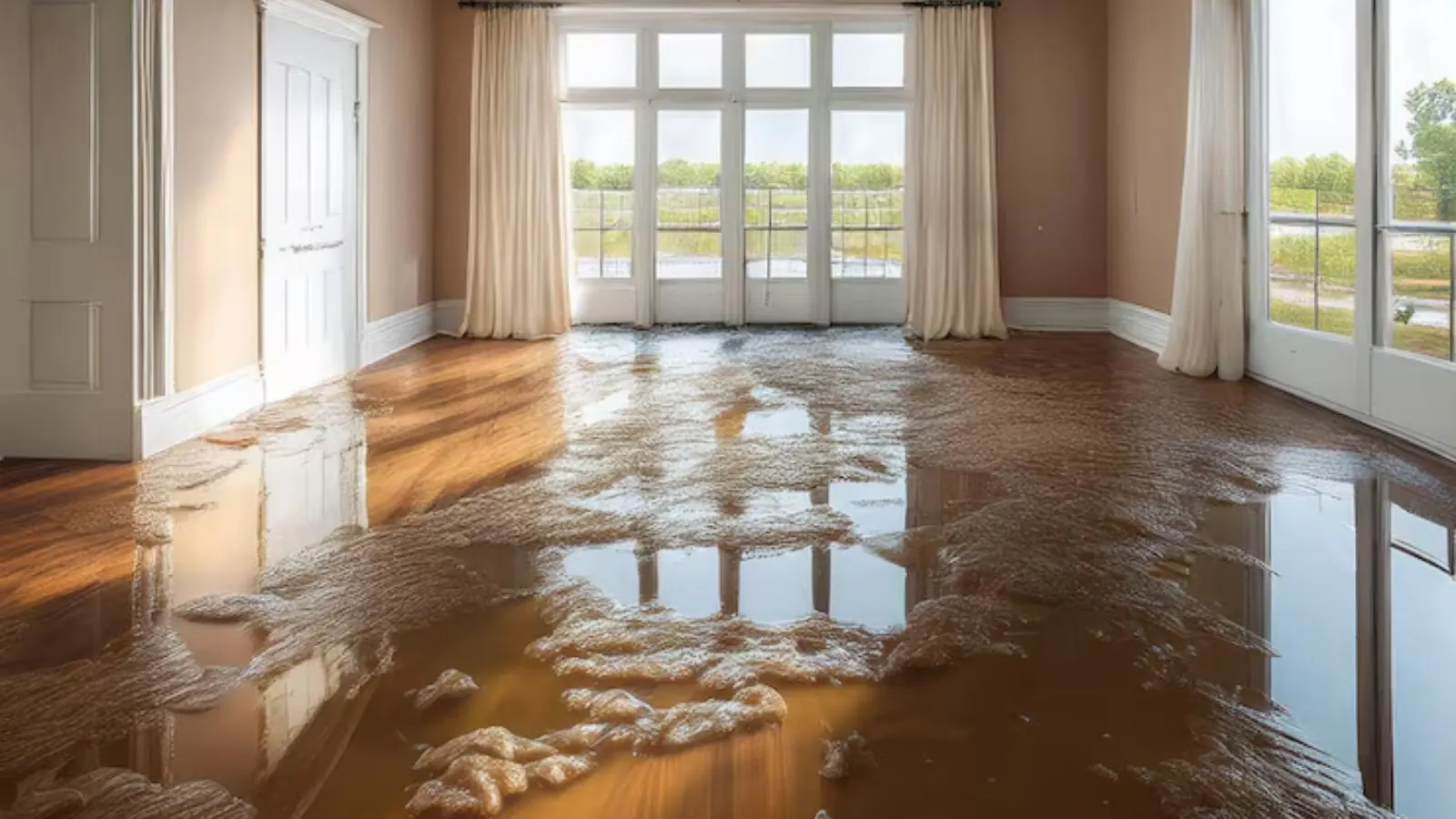
Water damage on a hardwood floor in Temple Hills usually shows up as edges that curl upward, a floor that feels slightly wavy or small gaps that open between boards. Wood takes on moisture and gives it back, and a floor that is dried carefully can sometimes return to flat. A floor that stays wet for days may not.
What Water Does To Wood
Wood swells across the grain when it absorbs moisture. If the underside of a board is wetter than the top, the board cups, with its edges higher than its center. If the top is wetter, it crowns, with the center higher. If the whole floor swells with nowhere to go, it can buckle and lift off the subfloor.
Time matters a great deal. Water from a quick spill that is wiped up has little effect, while a slow leak under a floor over days can soak the boards and subfloor and leave stains that no sanding removes.
| Sign | What it usually means | Typical response |
|---|---|---|
| Edges higher than the center (cupping) | Moisture below the boards | Find the source, dry, wait, then sand if it flattens |
| Center higher than the edges (crowning) | Moisture above or after over-sanding a cupped floor | Dry and reassess |
| Boards lifting off the subfloor (buckling) | Heavy, prolonged wetting | Remove boards, dry the subfloor, replace |
| Black stains or gray patches | Long-term moisture | Boards usually replaced |
| Gaps between boards | Boards shrinking after drying | Often normal, reassess after the dry period |
How A Hardwood Floor Is Dried
Drying starts with removing standing water and finding the source. The crew measures moisture in the boards and the subfloor, then sets air movers and dehumidifiers. For floors that have taken on a lot of water, special drying mats pull moisture out through the boards, and small holes or removed baseboards let air into the cavity beneath.
The process is slow on purpose. Drying too fast can cause splits, so crews watch the readings and adjust. The water mitigation page covers the equipment and the log.
Why You Should Wait Before Sanding
A cupped floor often flattens on its own as the moisture content falls, and that can take weeks. Sanding too early removes wood from the high edges and, once the floor dries and flattens, leaves a crowned surface. Ask for a moisture reading on the boards and wait until the reading stabilizes before refinishing.
Real Causes Behind Wet Hardwood
- A washer or dishwasher valve that fails and runs for hours.
- An air-conditioner condensate line that backs up and leaks onto the floor.
- A refrigerator ice maker line that drips slowly behind the appliance.
- A plumbing leak under the floor or in the wall above.
- High indoor humidity for long periods.
What To Do In The First Day
- Stop the source and wipe up standing water.
- Lift rugs, furniture and anything that traps moisture against the floor.
- Open windows if the air outside is dry, and run fans and a dehumidifier.
- Do not use heat guns, hair dryers or space heaters on the boards, which can split them.
- Take photos, then call for a moisture reading on the boards and the subfloor.
Refinish Or Replace
After the floor has dried and settled, the choice is between refinishing and replacing. Boards that have flattened, with no splits or dark stains, are usually candidates for sanding and refinishing. Boards that stay cupped, split or discolored are replaced, sometimes in a section and sometimes across the whole room to keep the pattern continuous.
Humidity, Housing And Wood Floors In Temple Hills
The EPA advises keeping indoor relative humidity below 60 percent, ideally between 30 and 50 percent, and says a basic hygrometer costs about $10 to $50. Temple Hills has many garden apartments, duplexes and single-family homes built from the 1950s through the 1970s, and wood floors in those buildings sit over varied subfloors and basements.
The practical tie-back is that a cheap hygrometer in a lower level or an apartment with wood floors is a low-cost way to spot a moisture problem before the boards cup. If readings stay high, find the cause, such as a wet basement or a leaking line.
Source type: federal agency guidance and a public encyclopedia housing description
If a floor in Oxon Hill or Suitland has been wet, the same drying approach applies, and the water damage repair page explains the rebuild if boards cannot be saved.
Common Questions
Can a water damaged hardwood floor be saved?
Often, if it is dried promptly and the damage is limited to cupping or slight swelling. Floors that have buckled, split or turned black are more likely to need partial or full replacement.
How long does it take for a cupped floor to flatten?
It varies with the species, the amount of water and the humidity, and it can take weeks. Wait for stable moisture readings before sanding.
Will a dehumidifier alone fix a wet floor?
A dehumidifier helps with humidity, but it does not pull water out of the boards or the subfloor. For a floor that has been wet, use professional drying equipment and measure moisture.
I rent in a Temple Hills garden apartment and my floor cupped after a neighbor's leak. What do I do?
Photograph the floor, tell the property manager in writing and keep records. The manager and insurers decide who pays for the floor, and your renters policy may cover your belongings. A moisture reading helps document the cause.