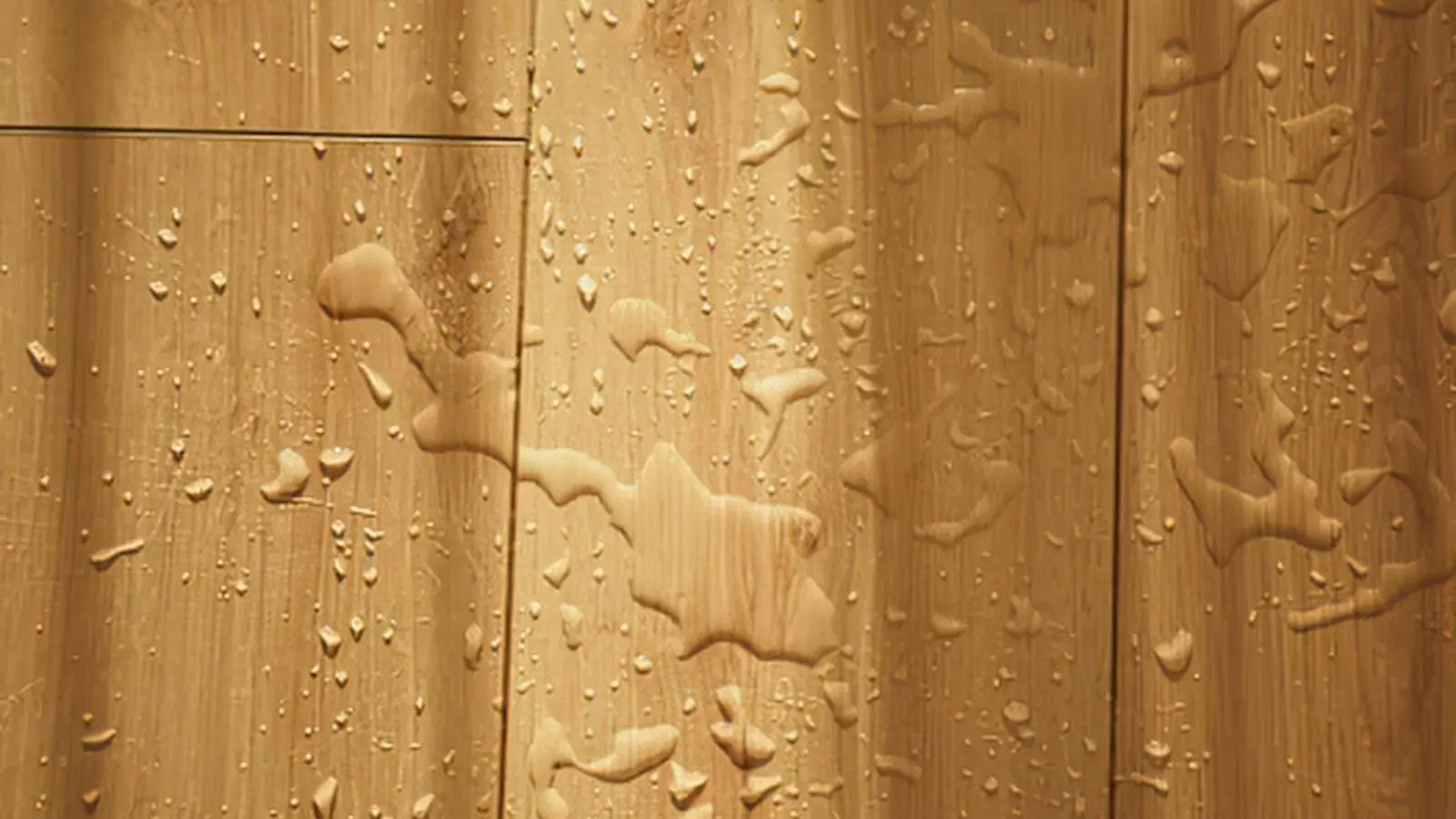
A water damaged wood floor in Temple Hills may not be solid hardwood at all. Many homes and rentals have engineered wood, laminate or vinyl plank that looks similar from above. They respond to water very differently, and knowing which you have changes what is worth saving. Solid hardwood has its own guide on the hardwood page, and this one covers the rest.
Engineered Wood
Engineered wood has a real wood veneer over layers of plywood or fiberboard. The plywood layers resist cupping better than solid wood, but they can delaminate if water gets between the layers. A quick wipe-up is usually fine. A longer soak can lift the veneer or swell the edges.
Thicker veneers can sometimes be sanded after drying, while thin veneers cannot, and the manufacturer's literature or the floor installer can tell you which you have. If the edges have swollen and do not return after drying, boards are replaced rather than repaired.
Laminate
Laminate has a fiberboard core with a printed surface. The core swells when it soaks up water and does not shrink back, so swollen edges and peaked seams are usually permanent. Laminate that was wet for more than a short time is generally replaced, and water often gets under the planks, so the underlayment and the subfloor need checking. A laminate floor that cups at the seams or smells musty after a leak is telling you the core is wet.
Vinyl Plank
Vinyl plank is waterproof on the surface and often on the core, so the planks themselves may survive a spill. The problem is the water underneath. Water that gets under a click-lock floor stays there, because the surface seals it in, and it can cause mold on the subfloor.
If vinyl plank has been wet, lift a few planks and look. If the subfloor is damp or musty, the floor has to be lifted and dried before reinstalling. The water damage cleanup page covers what gets removed and treated.
| Floor type | Reaction to water | Often saved? |
|---|---|---|
| Solid hardwood | Cups, crowns, buckles | Often, if dried promptly |
| Engineered wood | Edges swell, veneer lifts | Sometimes, depending on the veneer |
| Laminate | Core swells permanently | Rarely, after more than a short soak |
| Vinyl plank | Surface survives, water gets under | Planks often, subfloor must be dried |
| Tile over slab | Survives, grout and underlayment may need attention | Usually |
What To Check Under Any Floor
- The subfloor, for dampness, staining or soft spots.
- The underlayment, which may hold water and mold.
- The baseboards and the bottom of the drywall, which wick water upward.
- The source of the water, which must be fixed before the floor goes back.
Renters And Wood-Look Floors
In an apartment, you may not know what is under the surface, and the building owner often owns the floor. Photograph the damage, ask the manager what the floor is and ask who is responsible for the repair. Your renters policy may cover your belongings if a covered event caused the water. Ask the insurer about the details.
Questions To Ask Before Replacing A Floor
- Has the subfloor been checked with a moisture meter and found dry?
- Is the product still sold, so replacement boards will match?
- Does the quote include removing and disposing of the damaged floor?
- Does the job include underlayment, baseboards and transitions?
- What is the plan if the subfloor turns out to be damaged once the floor is lifted?
A floor can look dry on top and still sit on a wet subfloor, which is why moisture readings are taken under the floor and not only on the surface. A floor laid over a damp subfloor can cup, swell or grow mold underneath within weeks.
Property Maintenance Rules In Prince George's County
Prince George's County's Department of Permitting, Inspections and Enforcement says it handles property code enforcement, including property maintenance and zoning compliance, along with permits and inspections. That is the county office behind complaints about rental property conditions.
The practical tie-back for Temple Hills renters is to report a water problem to the landlord in writing first and keep dated photos. If a leak is not fixed, the county's enforcement office is a place to ask about options. This is general information and not legal advice, so check your lease.
Source type: county government agency description of DPIE
Floors in Clinton and Oxon Hill homes face the same issues, and the water damage repair page covers the rebuild.
Common Questions
How can I tell if my floor is laminate or engineered wood?
Look at a cut edge or a vent opening. Laminate shows a fiberboard core with a printed layer. Engineered wood shows layers of plywood with a real wood veneer on top.
Is vinyl plank safe after a leak?
The planks may be fine, but water under them can cause mold on the subfloor. Lift a few planks to check, and dry the subfloor before putting the floor back.
Can a landlord in Prince George's County ignore a leak that damaged my floor?
Landlord duties depend on your lease and the law, and this is not legal advice. Report in writing, keep photos and ask DPIE, the county office that handles property code enforcement, about your options.
Do I need to replace the whole floor if only one room was wet?
Not always, but matching and continuous flooring across rooms can force a larger replacement. Ask your contractor about transitions and whether the product is still available.